Super Scary! Looking at The Current State of Superannuation

As we scour the landscape for the best property investment options for our clients, we thought we would give a quick pulse check on the state of Australia’s superannuation.
As it stands, 2 out of 3 Australians are not confident they will have enough money to retire. And it’s no wonder. The increasing cost of living, high interest rates, skyrocketing rental prices and housing costs have really taken a toll on the country’s working population, especially those closing in on retirement.
How bad is it? Let’s look at some figures below.
1. Today’s average super balance will support a retiree with just $56 a day
Could you live on just $56 a day in Australia? We don’t know many Australians who could. The average super balance for retirees today, ages 65-69, is $414,380. If we spread this out over 20 years, it equates to just $56 a day. Age Pension does help with an additional $15,000 a year ($41 a day), and if you invested your super, you would likely also earn returns. However, let’s look further into the standards of living that can be afforded on these numbers.
2. A “comfortable” retirement requires a balance of $950,000. But how comfortable is it?
How do you want to enjoy your golden years? Maybe you’d like to take a few overseas holidays, or play golf on a regular basis. But you also want to not worry about day-to-day expenses like utilities or transportation and also be able to afford private healthcare.
Based on statistics from the Association of Superannuation Funds of Australia (ASFA), for a "comfortable" retirement, you will need $47,383 a year, $907 per week, or $129 a day. This amounts to $947,660. With Age Pension, ASFA estimates a single person needs a super balance of $595,000, or $690,000 for couples. However, their standards mention this only includes one overseas holiday every seven years, and the occasional restaurant. When considering this standard, the golden years aren’t quite as golden.
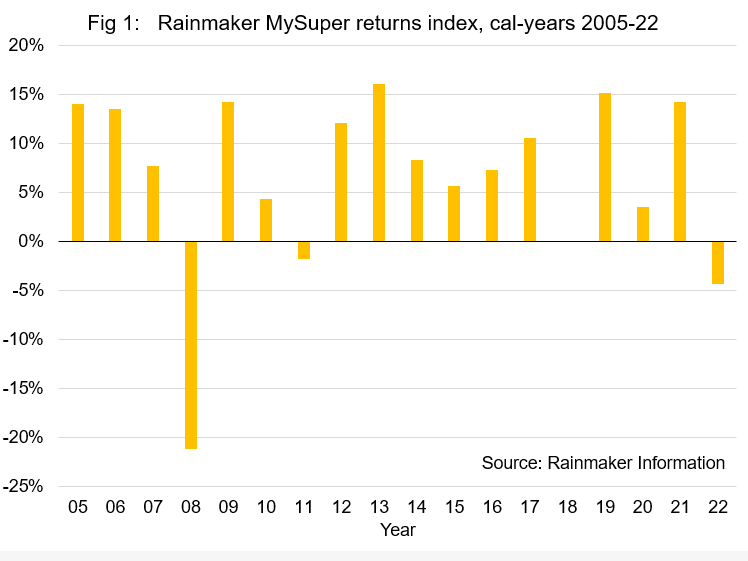
3. Super returns are only 2% p.a. for the last 2 years
With global turmoil last year, financial markets fell, and they took superannuation with them. The average My Super default fund experienced a loss of approximately 4.3%, marking the poorest return since the Global Financial Crisis. To put it in perspective, a super with a balance of $200,000 lost roughly $8,000 in one year. In the middle of last year, some supers were down as low as 11%, and some indexes estimate the average losses closer to 5-6% on the year.
Most experts warned to not panic, as 2022 was just the fourth time since 2000 that Australians saw super balances decline over a calendar year, and it was the first time since 2011. Superannuation is a long-term, 40 year investment. As predicted, supers rallied back in January and are up 8.5% this year.
“If you are not watching your superannuation, you lost money last year by trusting other people to make your investment decisions.That’s not the direction your superannuation should be moving,” says Chad Egan, CEO of GPFG. “If you want to take control of your own future and retirement, you should seek advice on better ways to manage your super, and investments with more consistent returns like property.”
4. Retirement living costs increased by 7.7% last year
While most Aussies are feeling the grips of inflation right now, anyone on a fixed income - such as retirees - is affected even more. ASFA’s estimation of what you need for a comfortable retirement is now $595,000, which is an increase of 7.7% from last year. These costs include everyday expenses such as health, communication, clothing and household goods, all of which increased in price over the last year. While Age Pensions are adjusted for inflation, self-funded retirees are seeing their nest eggs losing value over the last year.
5. Only 30% of Aussies have sought professional help with their superannuation
Despite the red flags and warning signs, Australians don’t seek help. When asked about their concerns about their retirement savings, only 30% of Australians have sought professional advice. Their reasons for hesitation are the cost (34%), they don’t think it will be worthwhile (32%), and also simply due to procrastination (19%).
However, it is worth noting that the benefits of seeking help can far outweigh the costs and risks of not. From the same study as above, Aussies stand to gain 8% to 29% in benefits depending on the age they start. Meanwhile, other studies show, those who received advice were twice as confident they would have enough money for retirement compared to the unadvised (52% vs. 26%).
“Rising costs and underperforming super is a recipe for disaster,” says Egan. “Australians should all be looking at the superannuation right now, and thinking about how to take control of their own retirement and planning for the future. Ignoring the problem isn’t going to make it go away.”
What is the solution?
If these figures are giving you pause to think about your own superannuation, get in touch with our team.
“This year, more than ever, Australians need to be seeking strong cash flow positive investments. Your super isn’t going to be enough on its own.” says Egan. “Due to the downturn in the Australian property and financial markets, our clients have turned to Bali and Thailand for high return investment properties. These investment opportunities have the added benefit of offering consistent returns, providing investors with a sense of stability and security, as they don't have to worry about the fluctuations in share market movements.We can offer options for 100% legal ownership, fractional investments, and cash back during the build phase as well.”
The GPFG team of professionals spans across the property to include mortgage brokers, tax accountants and qualified financial advisors, ensuring we assist our investors with the best possible solutions for wealth creation and retirement solutions.