
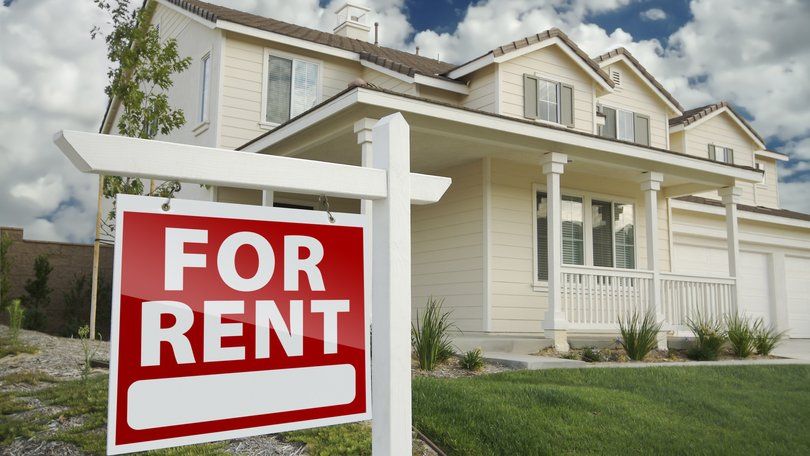
Australian residential rental yields reached 3.79% in August 2026. That is the highest they have been since September 2019.
On the surface, it reads like a recovery. After years of investors accepting relatively thin rental returns in exchange for capital growth, income finally appears to be catching up.
Then you look at how the number got there.
Gross rental yield is a simple calculation: annual rent divided by the value of the property.
It goes up when rent rises. It also goes up when the value of the property falls.
Right now, both are happening.
National rents rose 5.7% over the year to August, adding around $38 a week to the median rent. That part is genuine income growth.
But Australian home values have now fallen for five consecutive months. The national market peaked in March 2026 and sits 3.6% below that peak, with values falling 0.9% in August alone and 3.1% across the winter quarter.
The decline has also spread well beyond a handful of expensive postcodes. According to Cotality, 93% of capital-city suburbs recorded falling values through winter, up from 45.8% in autumn. Every capital except Darwin fell over the three months.
So yields are up. But some of that improvement has come from investors' asset values going down, not simply from their rental income going up.
Even at a seven-year high, the numbers remain challenging for investors focused on cash flow.
The average rate on outstanding investor housing loans was 6.44% in July. Compare that with a national gross rental yield of 3.79% and there is already a 2.65 percentage-point gap before any other ownership costs are considered, and those costs add up.
Property management can take between 5% and 12% of rent collected. There can be letting fees when tenants change, strata levies for apartments, landlord insurance, council rates, maintenance, land tax and periods when the property sits vacant.
For apartment investors in particular, strata can make a significant difference. The original research puts typical annual levies at around $2,000 for a low-rise building and $7,000 to $12,000 for a high-rise property.
None of that means a property isn't a good investment. But it does mean the headline rental yield is a long way from the cash an investor actually receives.
Cotality Research Director Tim Lawless makes the same point: gross yields across the larger capitals remain well below what would generally be required for neutral cash flow, particularly while interest rates remain elevated.
For investors priced out of Australia's capitals, regional property has increasingly been presented as the alternative: lower purchase prices, higher rental yields and potentially less borrowing required.
There is some truth in that. Regional gross yields are currently higher, at around 4.3%.
But the same underlying pressure is appearing there too. Regional values fell 0.4% in August and 1.2% over the quarter, with Regional South Australia the only rest-of-state market in the country to avoid a decline.
A higher yield also doesn't automatically make an investment better. Investors still need to consider local employment, population growth, tenant demand, vacancy, future supply and the prospects for capital growth.
Buying somewhere simply because it is affordable doesn't create demand for people to live there.
Read more: For Decades, Property Was the Australian Wealth Strategy. The Budget Just Changed That.
Australian residential property has never been only about rental income.
For decades, investors have been prepared to accept relatively low yields because capital growth and Australia's tax settings helped make the overall equation work. Negative gearing allowed eligible losses to offset taxable income, while the capital gains tax discount rewarded investors who held appreciating assets over time.
That is why a property producing a relatively modest rental yield could still make sense as part of a long-term strategy.
The current market makes that calculation more interesting.
Property values have softened, borrowing costs remain elevated, and holding costs have continued to rise. The 2026–27 Budget also introduces changes to negative gearing and capital gains treatment from July 2027.
Again, none of this means Australian residential property suddenly stops working. Values move in cycles, and periods of falling prices can create buying opportunities for investors with sufficient capital, cash flow and time.
But it does put more attention on a question that sometimes became secondary during long periods of capital growth: What does the asset actually produce while you own it?
For investors looking primarily for income, that question opens up a different property conversation.
Read more: The Lifestyle Dividend: Where Asia Is Investing Next
Operational real estate works differently from a traditional residential investment.
A residential property generally has one primary source of income: one tenant paying an agreed rent.
A hotel can generate revenue from the room, but also from restaurants, bars, wellness, events, retail, entertainment and other experiences within the property. Room rates can change with demand rather than remaining fixed for the length of a residential lease.
The property and the operating business effectively work together.
Lifestyle hotels take that model further because the experiences surrounding the room are deliberately designed as part of the product. JLL's research into Asia Pacific lifestyle hotels found that they achieved average room rates around 10% to 11% higher than traditional hotels, while generating approximately 30% more food and beverage revenue per occupied room.
Of course, hotels come with their own risks. Location, operator, brand, occupancy, room rates, operating costs and competition all matter. It isn't enough to put a hotel in a popular destination and assume it will perform.
But for an investor looking at property through an income lens, it is a very different model from relying on one residential tenant and future capital growth.
This is where our own developments become relevant.
At ELLE Resort & Beach Club in Seminyak, the room is only one part of the hospitality model. The resort has been designed around accommodation, restaurants, wellness, retail, entertainment and its beachfront beach club, creating multiple places for guests and visitors to spend across the property.
Under the current structure, investors participate in a 45% net revenue share, including accommodation and the beach club. Rather than looking only at what a room earns overnight, the model provides participation in the wider resort experience.
The Wylder in Berawa takes the same lifestyle-hospitality approach in a different direction. Accommodation sits alongside wellness, a rooftop bar, cinema, entertainment and a major food and beverage offering, including our partnership with Bali's Locavore Group. Its revenue structure similarly allows investors to participate in the hotel rooms and the wider venues and experiences operating around them.
There is also a significant difference in the cash-flow timeline. Our current investor structure includes minimum income protection of 8%, increasing to 10% for qualifying investment amounts, with payments commencing during construction.
For an Australian investor accustomed to buying a property, settling, finding a tenant and then receiving rent while meeting mortgage and holding costs, that is a very different structure.
It isn't a like-for-like comparison, nor should it be treated as one. Residential property and hotel investment have different structures, risks and potential benefits, and that is precisely why the comparison is worth making.
A seven-year high in Australian rental yields sounds like a significant improvement. Look beneath the headline and the picture is more complicated.
Rents have risen, but property values have fallen. Gross yields remain below borrowing costs before other expenses are included. Regional markets may offer higher yields, but they bring their own questions around demand and capital growth.
For investors who have traditionally thought about property primarily through what it might eventually be worth, there is another question worth asking: What can the asset produce while I own it, and where does that income actually come from?
That is where operational real estate, and particularly lifestyle hospitality, offers a very different model to consider.
Want to understand how hotel investment compares with the traditional Australian property model? Talk to the Geonet team about how ELLE Resort & Beach Club and The Wylder are structured, how their revenue models work and the role operational real estate can play within a broader investment strategy.
General information only. This article does not constitute personal financial or investment advice and does not take into account your objectives, financial situation or needs. Investments involve risk and past or current performance is not an indicator of future performance. Please consider the relevant investment documentation and obtain independent professional advice before making an investment decision.