

The Australian property market has long been a rollercoaster, but towards the end of last year and coming into 2025, we noticed that the media delivered some stark warnings, with some of the most jarring headlines yet. From what we can tell, it’s clear the landscape is shifting.
Here’s a breakdown of the most alarming stories shaping the property conversation of the past few months.
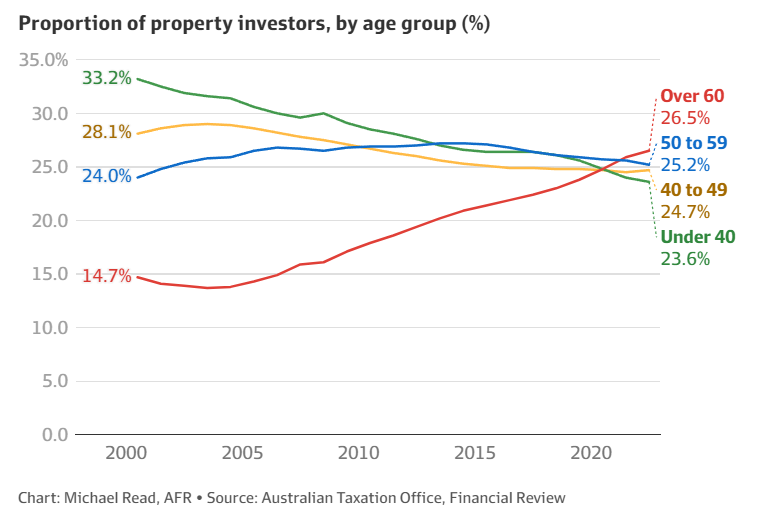
This op-ed in AFR paints a clear picture of a generational shift in property investment, saying that once seen as a cornerstone of wealth building, property investment appears to be losing its shine. According to ATO statistics, the proportion of taxpayers declaring rental income hit a 12-year low of 19.4% in 2022. The number of property investors has dropped from a peak of 2.39 million in 2019-20 to 2.29 million in 2021-22.
It’s not just fewer investors—it’s who’s investing. Boomers (59–78) now dominate, while under-40s are increasingly priced out, or “regulated out of the market.” Higher lending standards and stagnant capital growth are pushing younger Australians toward other investments.
The 2024 PIPA Investor Sentiment Survey confirmed what many suspected: landlords are selling up. 14.1% of investors sold at least one property in the past year, up from 12.1% in 2023. Of those, 65% sold after holding the property for less than 10 years, and nearly one in five sold after owning for under three years.
The top reasons? Increased holding and compliance costs (44.1%), rising land taxes (35.4%), and the desire to reduce debt exposure (32.9%). Investors also cited concerns about looming rental caps and tighter tenancy laws.
Mark Reed from Geonet, reacted to these stats, “These numbers are nothing new to us, we’re hearing the same story from investors every week. Rising costs, tighter regulations, and shrinking incomes are pushing them out of the market. They’re asking us about alternatives—where their money can work harder without the same headaches."
It’s no wonder investors are leaving the market - they are losing money, and the latest statistics published by Realestate.com.au and the Property Investors Council of Australia show that new investors in Melbourne and Sydney face staggering first-year losses. A typical Melbourne investor, purchasing a $937,289 property, can expect to lose $26,798 after factoring in stamp duty, land tax, and a 3.1% rental yield. Sydney isn’t far behind, with projected losses of $23,762 for a median $1.44 million home.
FIRST-YEAR INVESTMENT PROFIT ESTIMATES BY CAPITAL CITY
| Sydney: | -$23,762 |
|---|---|
| Melbourne: | -$26,798 |
| Brisbane: | -$5114 |
| Adelaide: | -$17,144 |
| Perth: | $1155 |
| Hobart: | $783 |
| Darwin: | $6393 |
| Canberra: | -$6244 |
*Estimates do not factor in capital growth, interest costs, property management fees or tax adjustments due to high variability. Source: The Property Couch Podcast
“While some investors might weather these losses for long-term capital gains, many are questioning whether the incomes are worth the upfront pain,” says Reed. “It’s really no wonder why we see investors doing their research into overseas markets and alternative options.”
We combined these two articles because they are about the same topic - one in three Australians would take a 40-year mortgage if it meant lowering monthly repayments, essentially extending their debt well into retirement. According to REA,com.au, three lenders currently offer these loans, with two being exclusively for first home buyers. For anyone doing the math, that means that homeowners taking up these offers would be tied up in debt until 2025.
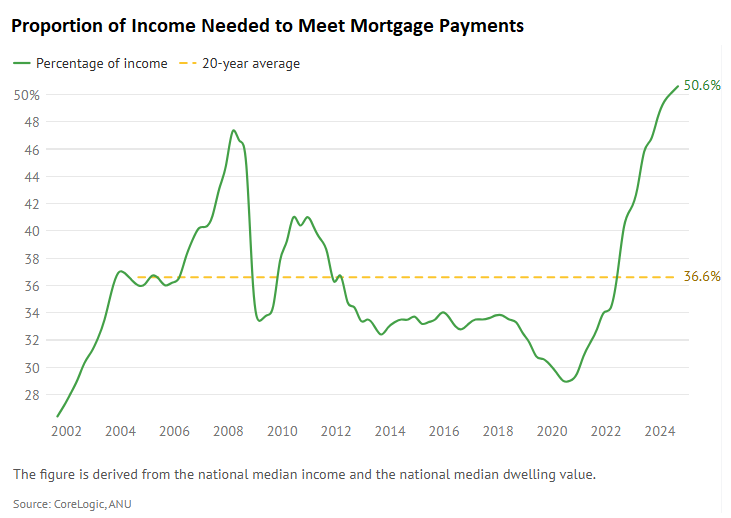
According to MacroBusiness, mortgage repayments now consume 50.6% of the median household income, the highest level it’s ever been.
“The headline calls it ‘mortgage slavery’ and that’s exactly what it is,” says Reed. “While it keeps the dream of homeownership alive, it locks borrowers into long-term debt, propping up prices without addressing affordability.”
Has the market really entered a downturn? CoreLogic reported in December that national home values fell 1.3% in the previous quarter, led by declines in Sydney and Melbourne. Regional markets, previously resilient, are now softening.
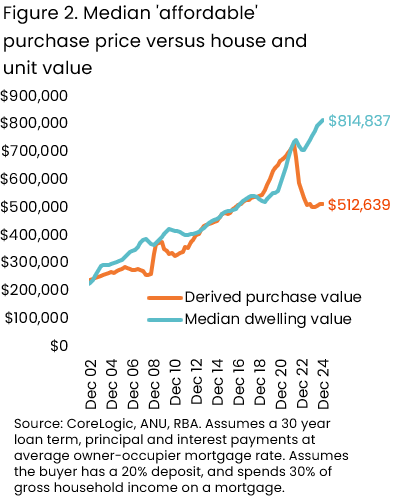
The bigger issue is affordability. The average home price now sits far beyond what most Australians can comfortably borrow.
Media Headlines: Crisis or Just Clicks?
Reed sees the stats as a wake-up call. “Investors are telling us they’re exhausted by rising costs and shrinking incomes. They’re looking for smarter, more resilient investments. They want options that can help with cash-flow now, help pay down their costs and mortgages and build wealth for the future,” he says.
“While the headlines might be grim, they’re also a reminder: the old playbook isn’t working. For savvy investors, it’s time to look beyond traditional property—because the market they knew is changing fast.”
What do you think - are the headlines valid, or just clickbait? Share your thoughts with our team!