

The dream of property ownership is growing further out of reach, especially for young professionals in Australia. Aspiring investors are held back by soaring real estate prices, thereby making them miss out on the benefits of investing early.
Young Australians face a dilemma: they can’t buy a house in a location that suits their career or lifestyle and they can’t relocate to a more affordable, albeit less desirable, property. For this group of people, rentvesting presents an appealing solution.
Rentvesting is a catchy term for a rent and investing strategy wherein you secure an investment property that you can afford now but cannot live in while renting in a location that suits your lifestyle.
Rentvesting at its core is buying a house for investing first, before buying a house you want to live in. It allows would-be investors and newbie home buyers to reap the rewards of real estate investing without sacrificing their way of life.
“It might sound nonsensical to have both a mortgage and rental bills to pay every month but rentvesting can be a great strategy. It’s great for people who cannot afford to buy a home in a business district or expensive neighbourhood but want to start dipping their toes in property investing,” says Chad Egan, CEO of Geonet Property & Finance Group.
Are rentvestors causing havoc to their finances by paying rent? With this strategy, rent money is not dead money because these property investors are holding an asset, even though they’re not currently living in it. If rentvesting is a great fit for their lifestyle and financial goals, that money isn’t going down the drain.
| PROS | CONS |
|---|---|
| Live where you want to live regardless of how much the property costs: As a renter, you can pick any location you want to be based in and aren’t limited by how much to shell out for a cash deposit or a loan. | Renter restrictions: Not owning your home has its limitations. Your landlord has the final say and can adjust your rent, order you to move out of the property, or conduct inspections. Renovations and pet ownership can be tricky as well. |
| Low maintenance and fewer expenses: Your landlord is required to take care of repairs, giving you more peace of mind. | Low maintenance and fewer expenses: Your landlord is required to take care of repairs, giving you more peace of mind. |
| Tax benefits: There are tax deductions you claim for investment property expenses | Capital Gains Tax: Selling a rental property means you’re subject to a Capital Gains Tax. However, if you are a resident of the home you’re renting out or selling, you’re exempted from paying this tax. |
| Flexibility: Rentvestors aren’t tied down to one location and are free to move whenever they want or upgrade or downgrade their residence. This is not the case for people who buy a home to live in. | Ineligible for First Home Owners Grant: Rentvestors don’t have access to the First Home Owners Grant, a one-off grant for those who reside in their own home for the first year after purchasing it. |
| Capital gains: Rentvestors can potentially earn a profit if their equity expands. | Potential loss of capital: Rentvesting is a strategy that comes with its own risk. You may have to sell your property at a loss if its value dips. |
| Rental income: Your income from leasing out your investment property can be used for your mortgage or for your personal rent bill. | |
| A faster way into the property market: One of the major benefits of rentvesting is that it gets you into the market sooner, which means more time for your asset to appreciate. No need to save up for a huge deposit or wait until your income grows. |
Though this strategy is most appealing to young professionals residing near CBDs and are searching for their first investment property, rentvesting isn’t limited to twenty to thirty-somethings.
People not in the market for their permanent home prefer rentvesting for several reasons. Perhaps they’re working in industries that require frequent travel. Maybe they’re digital nomads who want the freedom to roam everywhere they want but still want to enjoy capital appreciation of their assets.
The benefits far outnumber the cons for this subset of individuals as long as they know what they’re getting into and have assessed that rentvesting is the right vehicle for their financial goals.
Rent has been skyrocketing across Australia. The cost of residing in capital cities has surged by 17.7% while regional rent costs have increased by 25.5%. It’s also worth noting that rent is escalating faster in regional areas.
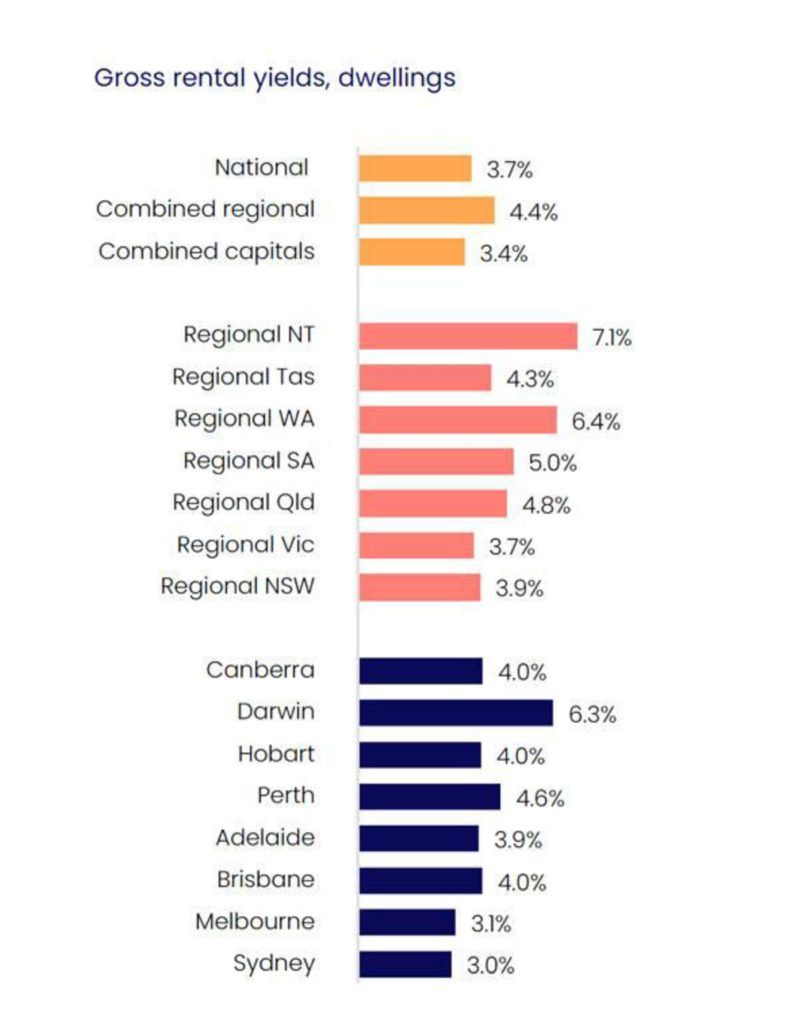
This is what a typical rental yield looks like in the major cities and regions:
“Whether rentvesting is a good strategy depends on the individual. Rentvesting is another tool in the kit for securing your financial future. One of the perks of this strategy is that it allows you to sustain the lifestyle you want and gives you an additional income stream that you can use as you see fit,” says Egan.
And should you decide that rentvesting is right for you, the possibilities are endless. Your choice of home is only limited by your budget.
Rentvesting may not look like the typical Australian dream of homeownership but for some, it’s undoubtedly the best solution for their personal financial goals.
For more information about rentvesting, contact our team today!