
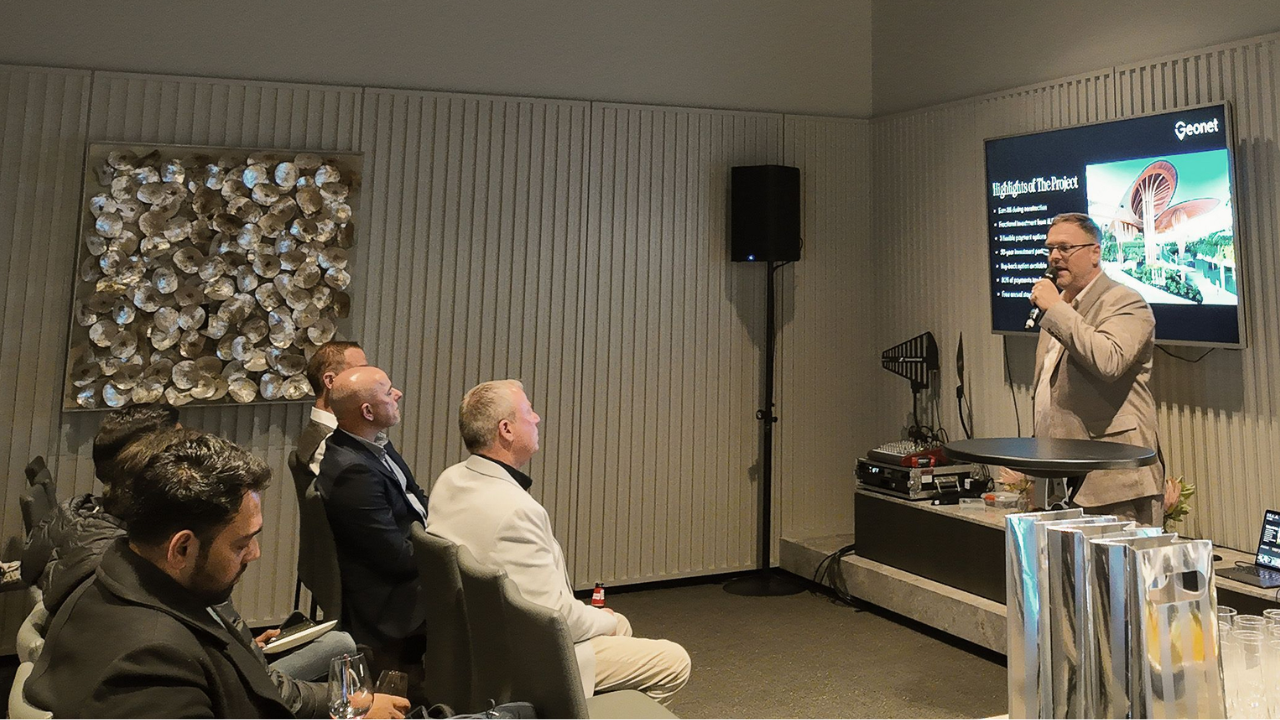
Our sales and wealth managers Mark Reed and Adam Nelson spend a lot of time on the phone with Australians who are starting to ask the same questions. What is my super actually doing? Can I take control of it? And — the one that surprises people the most — can I really use my self-managed super fund to invest in a luxury hotel in Bali?
The short answer is yes. Here's the longer version, broken down into the questions we hear most.
Most Australians have their superannuation sitting in an industry fund — AustralianSuper, HostPlus, CareSuper — and honestly, a lot of people don't know which one they're with, let alone what it's doing. Your employer drops in 11 to 13% of your salary, the fund manager invests it across stocks, bonds, and residential property, and you hope for the best.
A self-managed super fund (SMSF) is exactly what it sounds like: you take back control. Instead of trusting a fund manager to make blanket decisions for thousands of members, you decide where your retirement money goes. That's the core distinction.
Read more: Self Managed Super Fund Property: Our Full FAQ’s Guide
Industry funds have their place, but they're built around growth, not income. They have mandates, and those mandates don't usually include the asset classes that generate strong cash flow. They also rise and fall with the markets — and as we've all seen, sometimes they fall hard.
When you self-manage, you get access to a different universe of investments: commercial assets, alternative asset classes, and yes, hospitality. You can also run both simultaneously — keep your industry fund for the life insurance and income protection while building a second income stream through your SMSF. That's not a loophole. That's just smart diversification.
This is the one that puts people off, and it shouldn't. Setting up an SMSF sounds complicated because it is — there's ATO compliance, rollovers, bank account setup, annual audits. Navigating that alone is genuinely hard.
But nobody's asking you to do it alone. Geonet works with a network of SMSF specialists — accountants who do this every day, who love it, and who charge a lot less than most people expect. Setup typically runs between $1,500 and $2,500. Ongoing annual maintenance is in the $1,000 to $2,000 range. And here's something worth knowing: your current industry fund is already charging you fees. They're just quiet about it.
Think of it the way Adam does: he's training for a half marathon right now, but he's not writing his own nutrition plan. He's got experts doing that. Same principle applies here.
There's one overarching rule that governs SMSFs, and it's called the sole purpose test. Your fund must be maintained purely for investment and retirement purposes. You cannot use it to buy yourself something personal or benefit from it directly before retirement.
Within those boundaries, the investment options are broad: shares, property, commercial assets, crypto, bonds, alternative investments. The question isn't really can you invest in something — it's should you, and what's the long-term play?
Read more: SMSF Investment Rules: What You Can and Can’t Do with Your Super
This is where it gets interesting.
Most SMSF money in Australia ends up in residential property. And while that's familiar, the model has real problems right now — high entry costs, rising management fees, low yields, and returns that are entirely dependent on whoever's renting the place.
The luxury hotel asset class behaves differently. According to a recent Financial Times report, revenue per available room at ultra-luxury hotels jumped 10.6% last year — more than three times the growth rate for the wider hotel sector. Average daily rates hit an all-time high of USD $1,245 per night, up over 8% on the prior year. Occupancy rates climbed another 2.3% on top of that.
Why is luxury so resilient? Because the people spending money in these hotels aren't affected by market volatility the way the rest of us are. A cost-of-living crisis doesn't stop a high-net-worth traveller from booking their annual Bali trip. That's the asset class working in your favour.
Previously, hotel investment at this level was reserved for the ultra-wealthy — family offices, institutional funds, people who could write a cheque for an entire property. Geonet's work has been about changing that.
The entry point for exposure to Geonet's hospitality assets starts at $75,000. That's not a token stake in something vague — it's participation in a diversified investment that spans hotel rooms, restaurants, beach clubs, wellness facilities, and resort operations in Bali, the world's most visited tourist destination, which welcomed 21 million visitors last year.
The revenue mix is deliberately broad. Investors aren't just relying on room occupancy. They're participating in the full operations of the resort — every cocktail, cabana hire, corporate event, and spa treatment adds to the pool. That's the de-risking built into the model.
It's a fair concern. But compare the actual risk profile. Residential property in Australia comes with holding costs during construction, interest rate exposure, property management fees, vacancy risk, and ongoing maintenance. Most Australian property investors are negatively geared by design.
A well-structured hospitality investment in Bali is, by contrast, completely hands-off. A professional operator manages everything. Multiple revenue streams reduce dependence on any single income source. And the asset class itself has shown consistent growth through market cycles, through COVID, through global slowdowns.
The Geonet model has SMSF compliance documentation from specialist advisers confirming the asset class meets the requirements. This isn't a grey area.
The honest answer is: have the conversation. Geonet runs investor events in Perth, Melbourne, Sydney, and regional centres, as well as investor nights in Bali for anyone who makes the trip over. There are webinars, podcasts, and one-on-ones available.
If you've got more than $75,000 to $80,000 sitting in a super fund you've never really interrogated, it's worth 30 minutes of your time to understand what your options actually are. You might be sitting on something you've never thought to unlock.
Reach out through the Geonet website, come to an event, or just call. The questions you ask now are the ones you won't regret later.