
Bali’s property market is absolutely booming, due to its tourism-driven demand and evolving regulations. Last year, we said that 2025 was the best year ever, and in this current year we are looking at 2026 with a more cautious eye, with nine key statistics or trends affecting the market’s growth and staying power.
According to Flight Centre, Bali is the most popular international destination for Australian travelers. This is no surprise with a record number of 1.3 million Australians coming to the island last year, an increase of 16% over the year before. Bali outranked London, Auckland and Bangkok, and it was the favourite destination for family trips.
Read more: Flight Centre: Australia’s Year In Travel: What Were Our Travel Trends?
And on that same note, 2025 saw the highest number of international arrivals in Bali’s history, with 6.33 million arrivals, a whopping 20% increase over 2025. Early data for 2026 looks promising, being that at the end of February the international arrivals are already 15% more than last year.
While Australians contributed 25% of the arrivals last year, the largest share of the market, there was significant double-digit growth from regional markets in Asia - India (25% increase), China (60% increase), South Korea (30% increase), and Malaysia (18% increase).
“The increase of these regional markets is incredible, because they aren’t flying long haul. They can plan with less notice, for weekend or quick getaways, and help to fill Bali accommodation during shoulder months,” says Mark Reed. “We can see now that Bali’s seasons are less reliant on Australian school holidays. The island feels busy all year round.”
Bali hotels celebrated an unprecedented year in 2025, with both occupancy rates and Average Daily Rates (ADR) soaring to all-time highs, according to a Horwath HTL report.
2025 wasn’t just a rebound—it was a historic triumph.
Read more: Hotel Investment: 9 Reasons Why Hotels Are the Hottest Investment
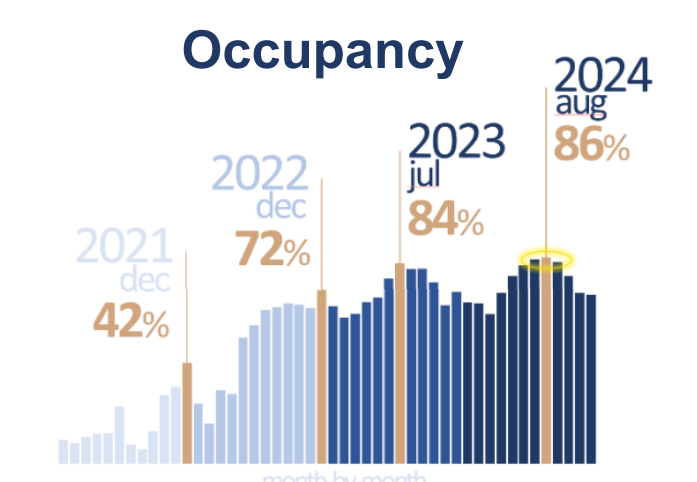
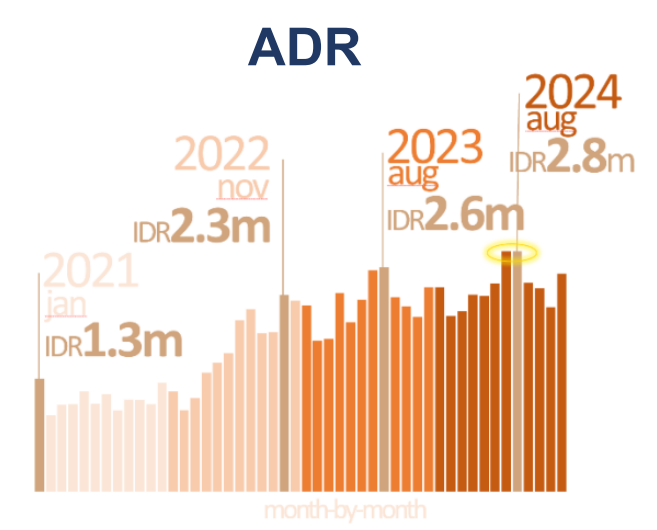
Data Source: Bali Hotel Association and Horwath HTL
While hotels enjoyed the best year ever, more specifically, we can see growing demand in the luxury and upscale segment. Luxury hotels saw a remarkable 13% increase in revenue per room growth, driven by a 10% occupancy increase to 53% while maintaining stable room rates. Even more impressive, Upper Upscale properties achieved 15% RevPAR growth through a powerful combination of 10% ADR increases and 70% occupancy.
This explosive hotel growth aligns with Flight Centre data revealing that 71% of travelers opted for 4-5 star accommodations, underscoring Bali’s dominance as a premier luxury destination.
Read more: 5-Star Reviews Are Pouring in for TUI BLUE Berawa!
At the moment, Bali’s upcoming hotel pipeline is slated to add 5,300 new hotel rooms to the mix. This might seem like a lot, but it's less than 10% increase to the existing 58,100-room market. This restrained growth ensures that the influx of new supply won’t disrupt the island’s strong occupancy rates, and also allows island officials to plan to combat fears of over tourism and overdevelopment.
Unsurprisingly, most of these additions are high-end properties, with 35 of the 43 hotels in the pipeline within the Upscale and Luxury categories, in the hotspots of Canggu (11 new hotels), Ubud (10), and Jimbaran & Uluwatu (10).
“Looking at the hotel market, it’s definitely a slow growth trajectory, we know that's a good thing for Bali, and especially for hotel investors,” says Reed.
With tourism well-established and new supply carefully balanced, the market remains resilient—proving that quality, not quantity, drives Bali’s hospitality success.
On the other hand, while hotels have slow growth, the rental market for villas and apartments is booming. Bali’s rental listings skyrocketed by 17.5% in 2025, hitting a record 48,000 rentals by December—a post-pandemic construction surge finally hitting the market.
But this rapid growth comes with complex trade-offs, including the effects of overdevelopment:
Additionally, the rapid expansion is now sparking fears of price wars amid oversaturation. Occupancy rates dropped 4.5% as demand lagged behind the flood of new listings. With that, across all booking channels, we see a buyer friendly market, forcing even luxury villas to slash prices to stay competitive. This may be a red flag for investors, as property prices are steadily increasing, up an average of 4.9% across all villa segments.
In the last month, the IDR has lost more than 4% of its value of AUD, with a massive 10% swing in the last two weeks. (1 AUD = 10,806.55 IDR at the time of writing). If this slide continues, the historic lows of the current IDR's depreciation against major currencies presents both opportunities and risks, a situation that we are also monitoring with caution.
On the bright side this creates a prime opportunity for foreign investors. With the rupiah sliding against the USD, EUR and AUD, Bali's real estate has effectively gone "on sale" - foreign buyers get significantly more property for their money. However, with a weaker currency domestic travelers—more than 60% of the tourism arrivals—may feel squeezed with properties catering to foreigners. Long-term investors and operators may also struggle with rising operational costs just as increased competition from new investors could pressure rental prices.
There is a silver lining to remember, is that market fluctuations are normal, and investors can ride out the volatility, as Bali's underlying property demand remains robust.
Bali’s 2026 property market presents both unprecedented opportunities and complex challenges. As interest in Bali property investment continues to rise, record-breaking tourism, booming luxury demand, and favorable currency conditions create ideal conditions for new and seasoned investors alike. However, villa oversupply and regulatory uncertainties mean the landscape must be navigated with insight and care.
The data reveals a clear trend: Bali’s future lies in premium, sustainable development rather than unchecked growth. At Geonet, we are recommending our investors focus on high-yield hotel assets—partnering with the right brand operators and selecting strategic locations that align with long-term demand.
One truth remains constant—Bali’s enduring appeal as a global destination continues to make Bali property investment a compelling, if nuanced, opportunity.
Read more: Bali Property Market 2026