

From tropical villas to branded hotel suites continues to attract global property buyers with its mix of lifestyle appeal, strong tourism demand, and comparatively affordable prices. But alongside the opportunity comes complexity. Foreign ownership regulations, evolving tax systems, and a wave of new development mean that buying property in Bali requires the right structure, support, and strategy.
Whether you're exploring your first overseas purchase or expanding an existing portfolio, this guide covers everything you need to know to invest in Bali in 2025.
The island welcomed a record-breaking 6.3 million international visitors in 2024, and Indonesia’s tourism ministry is targeting 7 million international arrivals in 2025. Australians continue to lead the charge—1.3 million visited last year, making Bali the #1 overseas destination for Australian travellers, according to Flight Centre.
“Bali's tourism numbers tell the story,” says Mark Reed. “We’re seeing consistently high demand across all accommodation types, and that drives rental incomes and property appreciation,especially in the premium segment.”
According to the latest Horwath HTL report, Bali hotels achieved a 75% average occupancy rate in 2024, and Average Daily Rates (ADR) jumped 10%, with July and August hitting an all-time high of IDR 2.8 million. The luxury and upper-upscale hotel sectors saw the most growth, and that’s precisely where the smart property investors are focusing their attention.
Yes—and no. While foreigners cannot directly own freehold land in Indonesia, they can invest in Bali real estate through long-term leasehold agreements. Leasehold contracts typically run for 25–30 years and are often renewable.
This is the most common legal route used by international buyers, and it's how the majority of Geonet’s investors enter the Bali market.
“A lot of investors come from freehold systems, like in Australia or the UK, and initially hesitate when they hear ‘leasehold,’” says Reed. “But when they understand the flexibility, the lower price points, and the cashflow potential—especially when properties are professionally managed—they come around quickly.”
To ensure your investment is secure and compliant, it’s critical to work with legal experts and reputable developers. GPFG works with in-house lawyers and experienced hotel operators to safeguard each step of the process.
Property prices in Bali increased an average of 4.9% last year, especially in high-demand areas like Canggu, Uluwatu, and Berawa. At the same time, rental yields for short-term holiday lettings have remained strong—provided your property is professionally managed and well-located.
It’s important to note that while villa listings have surged by 17.5%, that hasn’t translated into higher incomes for all owners. In fact, the rapid growth of unregulated rentals has caused some saturation in certain markets.
“Buying the wrong kind of property in the wrong area, without the right operator, is where things can go wrong,” warns Reed. “That’s why we focus on hotel-style investments, where there’s real demand and professional management in place to protect investors.”

In 2024, Bali experienced its best year ever for hotel performance. Luxury and upper-upscale properties were standouts, thanks to a 13–15% increase in revenue per available room (RevPAR). It’s no surprise then that more investors are choosing branded hotel investments over standalone villas or apartments.
Major international brands like TUI Blue, Accor, and ELLE are setting up shop in Bali—often in partnership with experienced developers who understand the island’s infrastructure, labour market, and tourism flow.
These projects don’t just offer higher yields—they also provide built-in management, maintenance, marketing, and compliance, which makes them especially appealing to overseas investors seeking “hands-free” or passive income models.
Read more: Hotel Investment: 9 Reasons Why Hotels Are the Hottest Investment for 2025
While Indonesian nationals and legal entities can own land under “Hak Milik” (freehold), foreigners can only lease land or own property through a leasehold (“Hak Sewa”) structure. Here's a quick comparison:
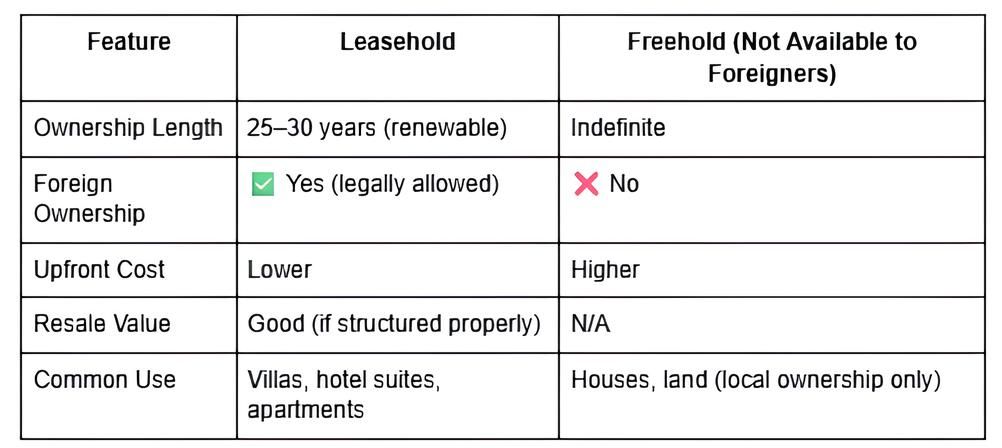
Leasehold agreements are registered with the Indonesian Land Office (BPN), and a well-structured lease includes extension clauses and clear developer responsibilities.
Read more: Overseas Property Investment: Our Top FAQs Answered!
Before purchasing property in Bali, due diligence is essential. At Geonet, we’ve seen too many investors burned by cutting corners. Here’s what to check before you buy:
“You don’t need to know everything yourself,” says Reed, “but you do need the right people around you. That’s what we’ve built at Geonet—a network of legal, financial, and hospitality experts who work in sync.”
Despite the many upsides, there are also real risks to investing in Bali. These include:
If you’re looking for a holiday home to enjoy part-time, a leasehold villa might make sense. But if you’re seeking long-term incomes and minimal headaches, professionally-managed hotel suites are a better choice in 2025.
These properties typically sit under trusted brands, benefit from national and international marketing, and are fully managed—so you don’t have to worry about bookings, repairs, or regulatory filings.
Bali’s property market continues to evolve—driven by demand from international travellers, high occupancy rates, and government initiatives to attract foreign investment.
That said, success in Bali property investment is not just about where you buy—but what you buy, and who you buy with.
At Geonet, we specialise in helping investors enter the Bali market with confidence, offering hotel-backed investments, legal guidance, and professional management from start to finish.
“We’re not here to sell just any property,” says Reed. “We’re here to deliver long-term, high-performing investments that are secure, sustainable, and professionally managed.”
Contact the team at Geonet to speak with a property expert or request our free investor guide.