
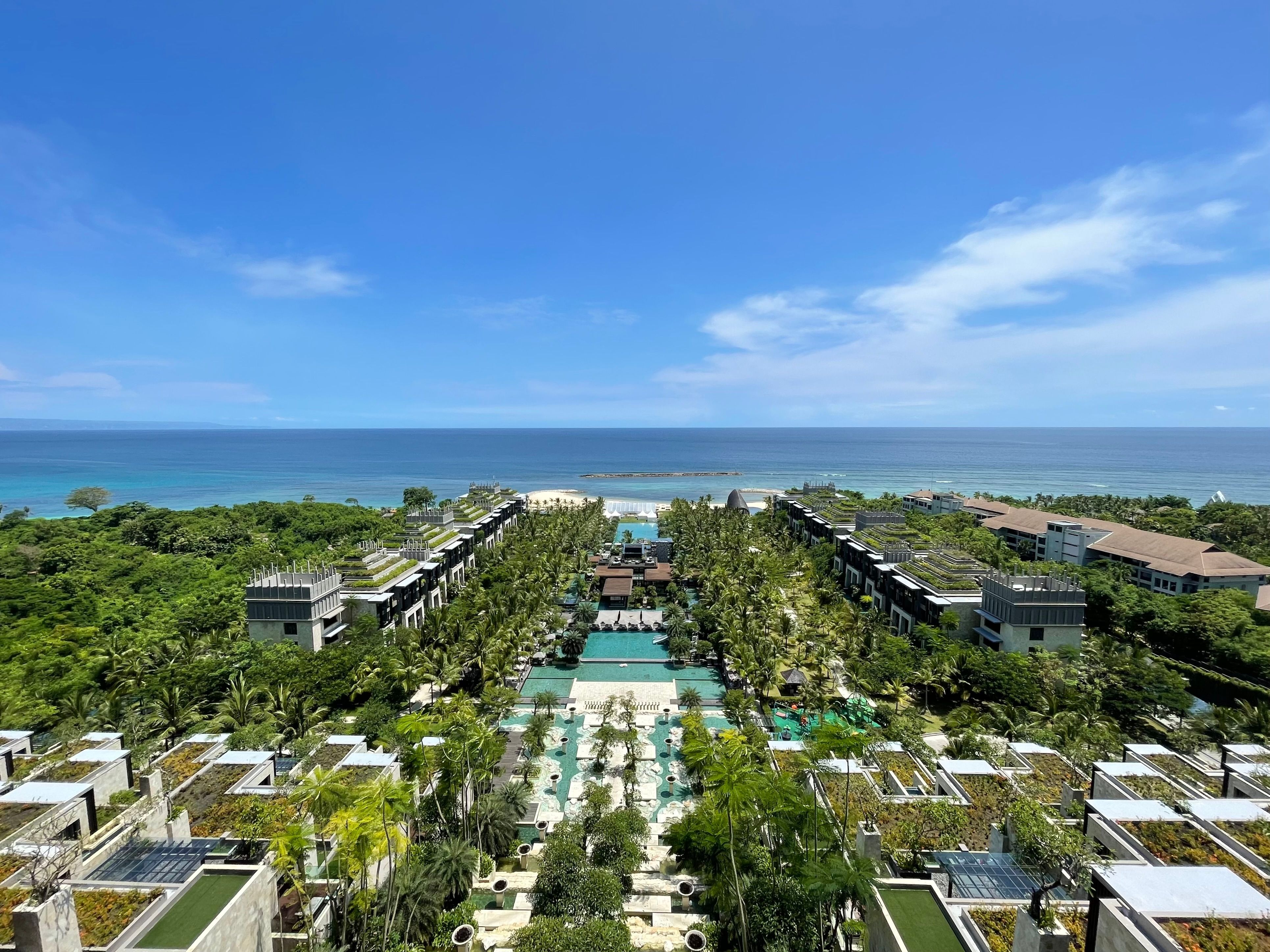
If you want to understand where hotel investment is heading, you can start by looking at the latest studies from JLL — the leading hotel property researchers — on where the money is going.
The latest global data across three studies shows a clear shift in how investors are approaching hotels in 2026 — from where demand is growing to which assets are outperforming.
Data taken from: JLL's 2026 Global Hotel Investment Outlook, JLL's APAC Hotel Operators' Sentiment Survey 2025/2026, and JLL's Lifestyle Hotels in Asia Pacific report
Here are 11 signals that stand out.
JLL's headline finding is clear: "Investment market dynamics for the hotel sector have markedly turned the corner, heralding a new investment cycle."
Global hotel transactions hit USD $65 billion in 2025 — up 22% from the low point two years prior. Hotels are now back to making up about 8% of all commercial real estate investment worldwide, which is in line with historical highs.
The money is back, and it's moving with confidence. That's the kind of environment where investors who move early tend to benefit most.
According to IATA data cited by JLL, air passenger volumes across Asia-Pacific are forecast to grow 7.3% in 2026. That's the strongest growth of any region globally, more than double the worldwide average of 4.9%.
The growth is being driven by rising middle classes across India, China, and Vietnam. More people flying, travelling… and likely.looking for hotels.
JLL identifies APAC gateways as sitting "among the best-performing revenue markets globally." Their operator survey, which covered 832 hotels across 22 countries, found that Indonesia posted 6% total revenue growth in 2025. Vietnam led the region at 8%, with Japan and South Korea also registering strong results. Operators across the region expect continued improvement through 2026.
This one takes a moment to understand but it's important.
When fewer new hotels are being built, the ones that already exist face less competition. That means they can charge higher room rates, attract more guests, and generate more income. JLL puts it simply: "Slower supply growth will underpin performance of existing hotels."
Bali is a direct example of this. The Bali Governor has imposed a moratorium on new hotel and villa building permits. Less new supply coming in. Growing demand from international visitors. That combination supports the performance of hotels that are already operating.
This is arguably the most important number in JLL's research.
Over the past ten years, global wealth has grown at nearly 10% per year. The number of millionaires has grown at over 5% per year. In the same period, the supply of ultra-luxury hotel rooms has grown at just 2.3% per year.
There are more wealthy people wanting to travel, and not enough premium hotels to accommodate them. That imbalance doesn't fix itself quickly, as building luxury hotels takes years and costs hundreds of millions. JLL's conclusion: "Owning luxury hotels can be an excellent way to have exposure to the theme of rising global wealth."
Read more: Hotel Ownership: The Accessible Way to Invest in Luxury Hospitality
JLL's dedicated report on lifestyle hotels across Asia-Pacific found something striking: lifestyle hotels consistently charge 10–11% more per night than traditional hotels in the same market. And this premium has held steady year after year, through different market conditions.
What's a lifestyle hotel? It's a property where the experience goes beyond just a room — distinctive design, great food and beverage, a connection to the local culture, spaces where guests actually want to spend time. Think less cookie-cutter chain, more destination in itself.
Guests are choosing these hotels, and they're willing to pay more for them. That pricing power translates directly into stronger revenue.
Read more: Trends We’re Watching in 2026. The Demand Signals Shaping Lifestyle Hotel Investment in Bali
Some people assume lifestyle hotels are a recent fad. JLL's data says otherwise.
Lifestyle hotel supply across Asia-Pacific has quadrupled in the past decade. And JLL forecasts another 34% growth in lifestyle rooms by 2027. Despite that growth, the rate premium is holding — meaning demand is keeping pace with supply.
Ten new lifestyle brands are expected to enter the Asia-Pacific market before 2027 alone. This is a segment that's growing because guests are demanding it, not because developers are oversupplying it.
Here's a statistic that changes how you think about hotel investment.
JLL found that lifestyle hotels in Asia-Pacific generate approximately 30% more food and beverage revenue per occupied room than traditional hotels. In some markets, the gap is even larger.
Why? Because a great hotel restaurant or beach club doesn't just serve guests. It attracts locals, visitors, and the wider community. The hotel becomes a destination, not just accommodation. Multiple income streams, not one.
For investors, this matters. It means income isn't entirely dependent on how full the rooms are. Even on quieter nights, a well-run hotel with strong F&B can keep revenue flowing.
JLL surveyed 832 hotels across 22 countries and asked them how they felt about the year ahead.
The result: 3 in 5 hotels — 59% — are positive on food and beverage revenue in 2026. Among lifestyle hotels specifically, that number rises to 66%. This is operator-level confidence from people running hotels every day, not just researchers reading data from a distance.
The same JLL operator survey asked hotels what they expected for their overall profits in 2026. Most markets across Asia-Pacific are forecasting profit growth of 2–6% year-on-year. Vietnam leads at 6%, followed by India and Japan at 4%.
Indonesia, and also Bali, is in the positive column, with operators expecting both occupancy and room rates to improve through 2026 and beyond.
When professional investors with enormous amounts of capital to deploy start buying into a sector, it's worth paying attention.
JLL notes that private equity — large investment firms that manage money on behalf of institutions and wealthy individuals — increased their interest in hotels significantly in 2025, and this is expected to grow further in 2026. What are they buying? Quality hotels in markets with strong demand and limited new supply.
That's not a coincidence. They're reading the same research we've been summarising here, and drawing the same conclusions.
JLL's research tells a consistent story: hotel investment is in a new cycle, Asia-Pacific is leading the global recovery, lifestyle hotels are outperforming traditional ones, and the gap between wealthy travellers and the supply of quality hotels is only getting wider.
Bali sits right at the intersection of these trends. Growing international arrivals. A government-imposed cap on new supply. Room rates that have risen 10–15% per year for three consecutive years. Waldorf Astoria, Mandarin Oriental and JW Marriott all choosing to build here.
Want to understand what hotel investment in Bali actually looks like in practice? Our team at Geonet Properties works with investors at every stage of that conversation — from understanding how these assets generate income, to how they're managed, to what the numbers look like. We're happy to walk you through it.